
ML4 — Introduction to pranayama
Level: 1 Beginner | Duration: 10 minutes | Type: Conceptual and experiential LearnDash location: Course → Lesson 2 → Topic 1
Learning objective
By the end of this micro-lesson you will understand what pranayama is and be able to perform one basic breath technique.
Concept
Pranayama is the fourth of Patanjali’s eight limbs of yoga. The word breaks into “prana” — life force or vital energy — and “ayama” — to extend, draw out, or regulate. Pranayama is therefore the practice of extending and regulating the life force through breath control.
In practical terms, pranayama means deliberately changing the speed, depth, rhythm, and pattern of your breathing. This directly affects the nervous system, the mind, and the energy levels of the body.
The breath is the only automatic function of the body that you can consciously control. Your heart beats without your input. Your digestion happens without your awareness. But your breathing — while it continues automatically — can be deliberately slowed, deepened, held, and directed the moment you choose to intervene. This makes the breath the most direct bridge between your voluntary and involuntary nervous systems.
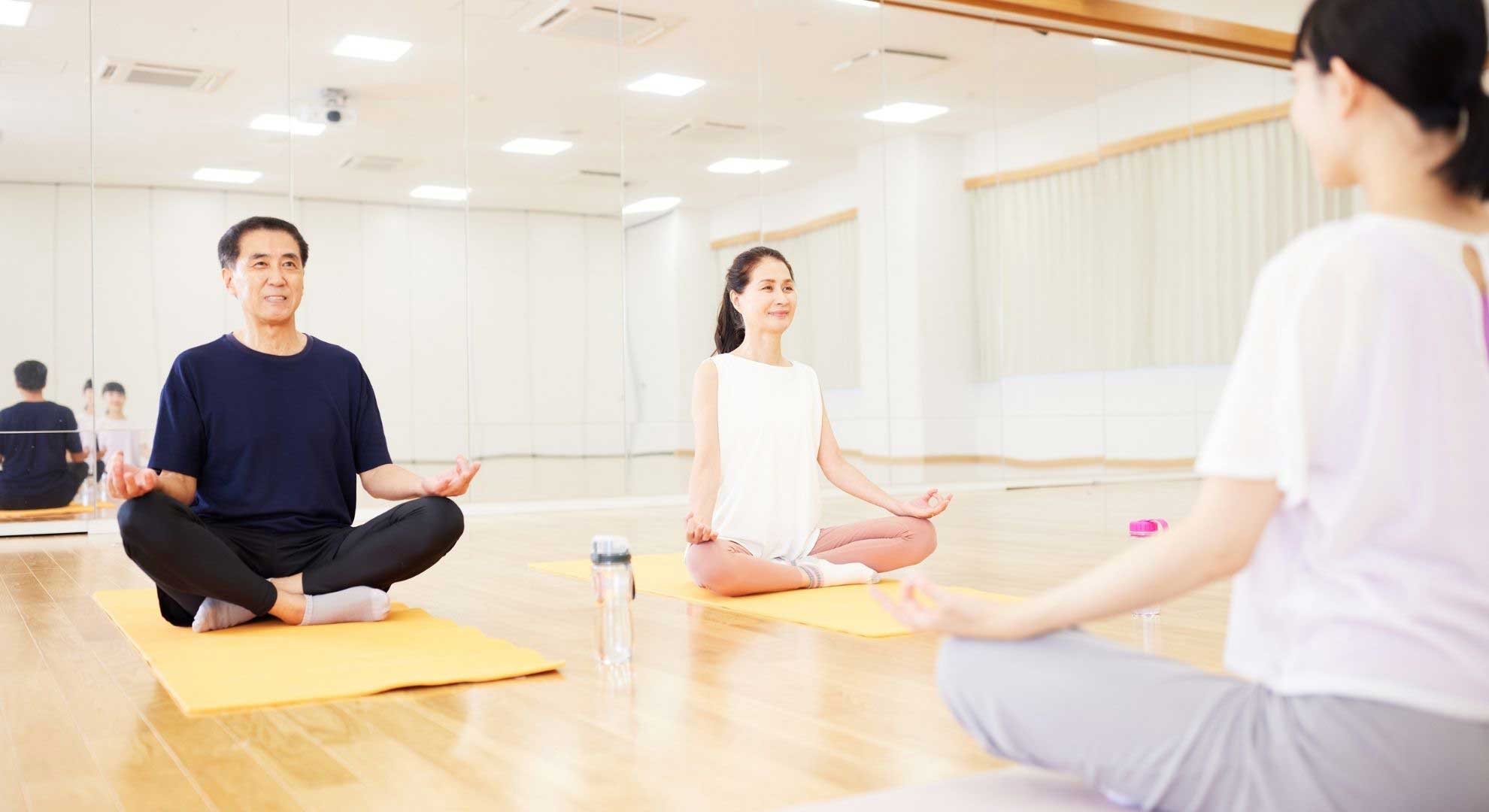
Exercise — natural breath observation: Sit comfortably with your spine upright. Close your eyes. Without changing anything, simply observe your breath. Notice where you feel it most clearly — the nostrils, the chest, or the belly. Notice the length of the inhale compared to the exhale. Notice any pauses. Do this for ten breaths before continuing.
Exercise — the three-part breath (Dirga pranayama): Inhale slowly, first filling the belly, then the ribcage, then the upper chest. Exhale slowly, releasing from the upper chest, then the ribcage, then the belly. This is one complete breath. Practise three rounds now.
Key point
Pranayama is not about forcing the breath or breathing as deeply as possible. It is about bringing awareness and eventually ease to the breath. Gentleness and consistency matter more than effort.
Common misconception
Many beginners think pranayama requires special training before they can begin. Natural breath observation — simply watching the breath without changing it — is already pranayama. Start there.
Self-check
Can you describe the three-part breath from memory and demonstrate it to yourself right now?
Reflection prompt
What did you notice when you observed your natural breath without trying to change it?